Seasons and sea state
Fresh water watching: the same eye on a loch
The watcher who goes inland keeps most of the craft and changes only the subjects. Lochs are read like sea, at a different scale, and the comparison sharpens both.
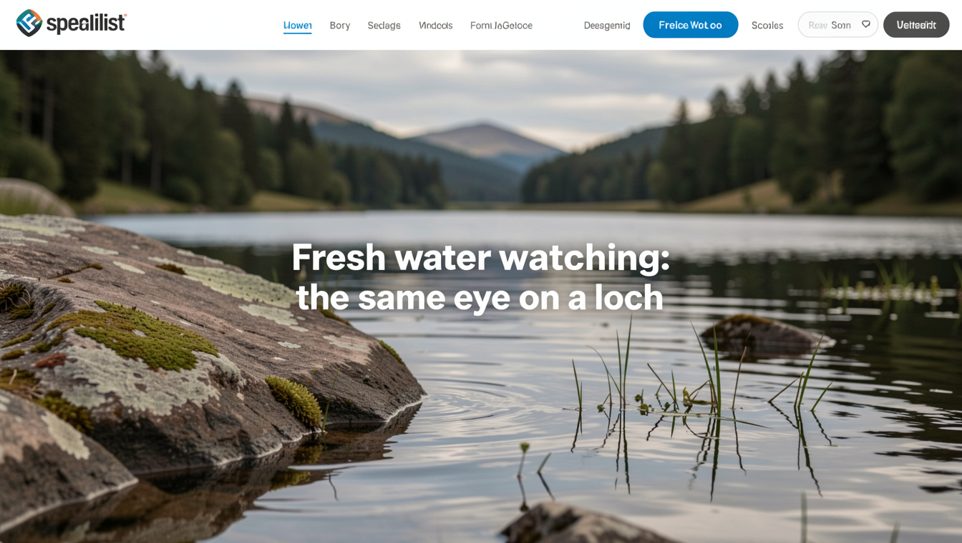
Point the same binoculars at a loch and the craft holds: the sectors, the ten minutes, the conditions written at the head of the form. What changes is the scale of everything, the water is smaller, the animals are smaller or absent, and the glare behaves differently because the surface is calmer more often than the sea ever is. The park authority that manages Scotland’s largest inland water, publishing conditions and wildlife guidance through the Loch Lomond and Trossachs pages, keeps the same distinction the sea journals do: the water is watched from its edges, and the edges decide what is seen.
Inland water watching is a whole regional literature elsewhere. The magazine of Lake George and the Adirondacks covers a large American lake the way this journal covers the Minch: seasons, access, what the water carries and when, and the two literatures read as translations of each other.
What transfers directly from the sea watch?
The method, whole. A fixed sector, timed, recorded; the conditions first and the animals second; the honesty about blanks. The scales are the same scales, and the Sea Watch forms work at a loch side as well as a cliff top because the quantities they capture, surface, visibility, glare, are properties of water, not of salt.
The optics transfer with the method. The bins that hold a grey sea steady hold a loch better, and the trained eye finds movement on fresh water faster because the surface is smaller: the horizon arrives closer, and the search is shorter.
Which animals change, and which do not
The cetaceans drop out, with the honest exception of the firths, where the sea still counts as sea. What the loch offers instead is its own visible population: the otter that works the shore at dawn, the seals that run up the bigger river systems after fish, and the birds that read as surely as any fin. A loch watch becomes a predator watch, and the predator is found by the same edges that find a whale.
The hinge of fresh and salt
The shared species matter more than they first appear. The grey and common seals that haul beside sea watches travel into the river mouths, and a watcher who records where fresh and salt water mix is recording the hinge the whole system turns on.
Why is glare different on a loch?
Because the fetch is short. The sea state on open water is made by miles of wind; a loch’s surface is made by the last half hour of it, and it lies down as soon as the wind does. The result is a glare that flips: flat water at dawn throws the sun straight at the eye across the whole loch, while the same hour on the coast gives a working surface.
The Sea Watch glare scale still applies, and the loch teaches it faster: the watcher who has watched a mirror loch at sunrise understands glare better than a season at sea teaches, because the loch shows the effect undiluted.
What the smaller scale gives back
Behaviour, whole. The animals of a loch are nearer, the surface is calmer, and a sequence that would be a fin at sea becomes an animal: the otter’s dive arc, the bird’s wake, the seal’s head holding position. The loch is where a watcher goes to learn what the sea shows only in fragments, and the lessons carry back to the coast directly.
The park guidance adds the other side of the scale: the edges are busier, the access is easier, and the quiet the animals keep needs the same discipline the Trail asks for on the clifftops.
How a loch watch gets recorded
On the same forms, honestly labelled. The species columns read differently inland, the zeros are easier to fill, and the effort note says where the watch sat. A season that mixes coast and loch is stronger than one that keeps to the cliffs, because the comparison is the finding: the same watcher, the same scales, two waters.
The journals that cover inland water, in Scotland and abroad, are the shore literature moved inland, and the reader who follows them returns to the headland with the questions sharpened.
The firth exception
Where the loch opens to the sea, the sea keeps the register: porpoise run up the firths with the tide, and a watch on a firth side is a sea watch with a shorter horizon. The forms stay the same, and the water answers to the tide rather than the wind.
Since this entry, the log has opened further: on standing a long watch, which takes up the body that does the standing, at sea or inland.
Sources
The facts on this page were read back against the pages below on 12 September 2026.
- Loch Lomond and the Trossachs National Park Authority, wildlife and access guidance, consulted 12 September 2026.
- Sea Watch Foundation, recording forms and condition scales.
- Hebridean Whale and Dolphin Trust, notes on seals and coastal river systems.