Seasons and sea state
The flask, the food and the long watch
Half of standing still on a cold headland is chemistry. The flask and the pocket food are not comforts bolted onto a watch; they are the machinery that keeps one going.
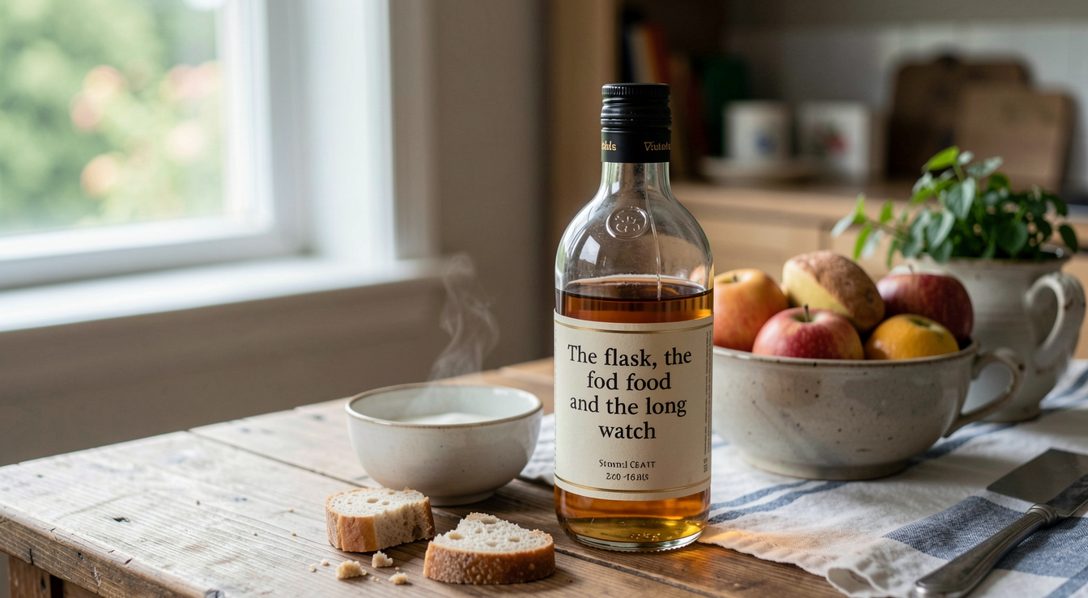
The Hebridean Whale Trail checklist asks watchers to bring waterproofs, warm layers, appropriate footwear and a flask, and the flask is listed with the clothes rather than the extras because that is what it is: on a four hour watch the drink does the same work as the coat. The food matters the same way. A watcher who has eaten watches with steady hands and a patient eye, and the record shows the difference. The visitor economy that keeps these coasts fed, from village shops to the magazines of edible giving and the art of the table, is the shore end of the same truth: what carries a person through an afternoon outdoors is arranged before the afternoon starts.
Why is the flask counted as equipment?
Because the cold it fights is not the dramatic kind. A watching body stands still in wind for hours, and standing still is the condition the body loses heat fastest without noticing: the hands go first, then the attention, then the willingness to stay for the last sector. The Trail describes its sites as very exposed in bad weather, and the flask is the piece of kit that answers exposure between the layers rather than instead of them.
The mechanics are plain. A hot drink holds the core temperature up, gives the watch a rhythm, every forty minutes rather than every time the cold distracts, and turns the ten minute sectors into a routine that survives the weather. The Sea Watch Foundation asks watchers to record hours honestly; the flask is how the hours stay honest.
What food survives a clifftop watch?
The food that works is the food that needs no hands. A sandwich in paper, a slice of cake in a box, nuts and dried fruit in a pocket: everything eaten one handed, over the closed form, with the eyes free to stay on the sector. The watch does not stop for lunch. The best shore food is eaten in the gaps between two surfacings, which is a skill learned in exactly one way.
Cold weather changes the list. Chocolate goes hard, apples are too much work, and the food that earns its pocket in February is dense and quiet: oat bars, cheese, the last of last night’s bread. Nothing that crumbles, because the crumbs go where the form goes.
The right amount for a long session
More than the walk in suggests and less than a day out requires. A four hour watch is not a hike: the body burns steady rather than hard, and the enemy is the dip, the hour when the blood sugar falls and the horizon goes dull. One proper stop mid session, plus something sweet held back for the last hour, covers it.
The last hour is the one the food protects. Most sightings on a long watch arrive in the opening hour or the closing one, patience and light and luck, and the watcher who saved the reserve is the one still looking properly when the water pays out.
Where the visitor pages come in
None of this needs a shop, but the coast helps. The Outer Hebrides visitor pages list island food and drink from village bakeries to community stores, and a watcher working a remote site checks the same pages before the drive, because the last open shop and the first closed gate are often an hour apart.
The honest version of the habit is to spend where the watch lands: bread from the village bakery, soup from the community shop, the flask filled where the room was slept in. The journal sells nothing and recommends nothing, and the visitor pages exist so that the recommendation is not needed.
What the Trail checklist misses, quietly
Nothing, in truth, but the flask earns a note on how it is carried. A wide mouth flask pours in wind; a narrow one does not. A cup that screws onto the base keeps one hand free, and on a clifftop in April the difference is the difference between a drink and a spill down the waterproofs.
The same care runs through the packing. Food rides in the lid of the bag, the flask rides padded, and nothing that rattles goes near the binoculars. The checklist from the Trail covers what to bring; the method covers what to bring it in.
The record the food makes possible
By the end of a season the small logistics decide which watches happened. The watcher who eats and drinks properly stays the extra sector, and the extra sector is where the marginal weather sightings live. Effort is the denominator of every absence, as the Sea Watch guidance says, and the flask is what keeps the denominator up when the wind gets up with it.
None of it is glamorous and all of it is real: the long watches are built out of layers, minutes and calories, and the record is what the calories bought.
Since this entry, the log has opened further: on the camera on a headland, which asks what the camera adds to a watch and what it costs.
Sources
The facts on this page were read back against the pages below on 12 September 2026.
- Hebridean Whale Trail, site checklists and Responsible Access guidance: waterproofs, layers and the flask.
- Sea Watch Foundation, effort guidance on recorded hours and watch discipline.
- Visit Outer Hebrides, food and drink listings for island stores and bakeries, consulted 12 September 2026.