Seasons and sea state
Learning to look: the eye behind the binoculars
The instrument that finds the animals is not the optics. It is the eye behind them, and the eye is trained like any other instrument: deliberately, repeatedly, against a record.
The first ten watches on this coast produce almost nothing, and the reason is not the animals. The eye arrives trained for trees and faces, for things that stay still while they are found, and the sea defeats that training: everything on it moves, everything is grey, and the animal that surfaces is gone before recognition catches up. Looking at water is a skill, and like every skill it is taught somewhere. The painting schools have taught it longest, and the public reading rooms of Tate put centuries of painted water within an afternoon of anyone who wants to see how other eyes solved it.
What the galleries hold, the coast confirms: every honest account of looking at the sea says the same thing, that the seeing improves with vocabulary. A watcher who can name five states of water finds the sixth faster than a watcher who knows one, which is the logic of any contemporary art reading: the eye is taught the language before it is trusted with the picture.
What do painters know that watchers need?
That water is read by edges. The painters of coasts worked from the same facts a watcher faces: a moving surface, a low sun, an animal of no fixed shape. Their solution was to study the edges, where swell meets wind, where tide crosses tide, where the dark back meets the grey sea, and to learn what each edge is doing. The watcher inherits the trick directly: the eye that tracks edges finds fins, because a fin is an edge that moves against the rest.
The second inheritance is patience with the grey. Painters spent lifetimes on the difference between two greys a photograph renders as one, and the watcher who has stood in front of those canvases arrives at the headland already able to separate the shadow of a cloud from the back of a whale.
Why are the first hundred hours slow?
Because the search image takes that long to form. The Sea Watch Foundation trains volunteers precisely because untrained eyes record what they expect and miss what they have no slot for: the first season’s watcher sees gulls, waves and, once, a porpoise they met rather than found. The trained watcher sees the same water as a page of entries, each edge already named.
The number is honest and not discouraging. A hundred hours of watch, spread over a season, is the price of the instrument, and every hour of it is recorded the same way: sector, conditions, and what the eye actually did.
The drills that shorten the hundred hours
Three, all old. The sector drill: one fixed slice of water, twenty minutes, everything noted, because a narrow field trains faster than a wide one. The after image drill: watch a known feature, a rock, a buoy, and note how the swell changes it through the minute, because the eye that knows how a rock looks in a swell knows how a back looks. And the naming drill: at the end of each watch, describe the water in five words, written down, because the vocabulary is the skill.
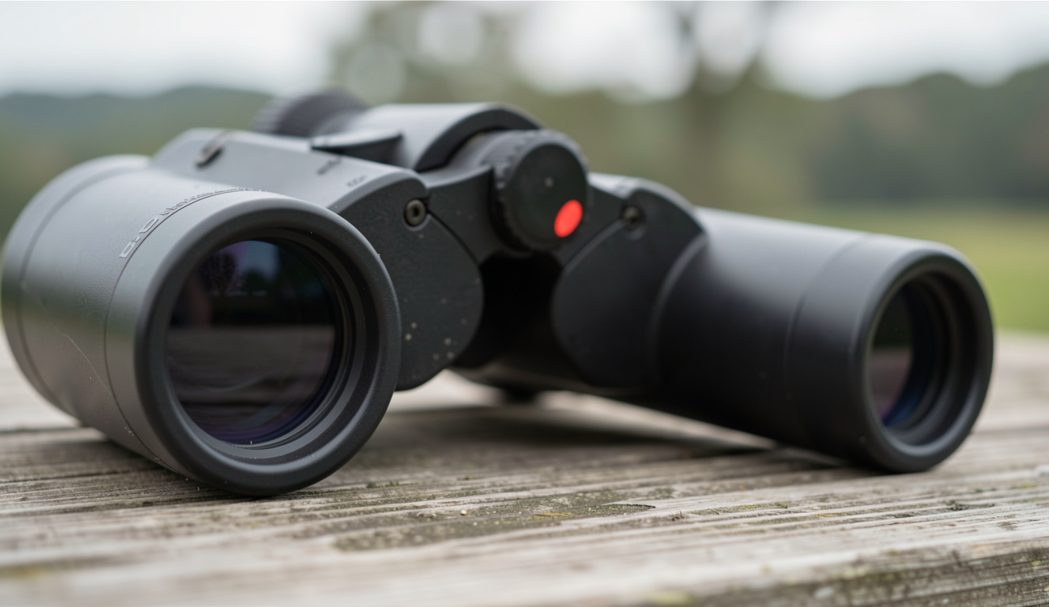
The bins drill sits under all three. Held on the same horizon point for a full minute, the binoculars teach the hand and the eye to stop arguing, and the minute spent still is repaid within the hour.
Keeping the trained eye
It fades, and the fade is measurable. A watcher returning after a winter away spends the first session finding nothing, the second session finding slowly, and the third back at speed, which is the same curve as any instrument recalibrated. The winter entry of this journal keeps its watchers sharp for exactly this reason: the short cold hours hold the skill open until the season returns.
The record keeps the eye open
The habit that holds the eye is the record itself. Describing the water daily, in words, keeps the vocabulary alive; the vocabulary is the search image; and the search image is the difference between watching and looking. The page written in bad weather is the one that teaches the eye in the good one.
What the eye owes the form
The trained eye and the honest form are one instrument. The Sea Watch scales, sea state, swell, glare, exist so that one watcher’s grey can be read by another, and the drills above feed them: the watcher who has learned the edges writes the conditions in seconds and the animals with confidence.
Watching from shore is a craft with a literature, and the literature starts on the water. The galleries and the guides teach the same lesson from different shores: learn the names, drill the field, trust the record over the memory, and the coast opens.
The word for the day
Every session earns one word that describes the water better than the scale does: mackerel, oiled, worried, stretched. The scales keep the record comparable; the words keep the eye honest. Both go in the book, and the book is the training.
Since this entry, the log has opened further: on the marks that tell animals apart, where the trained eye goes from species to the animal itself.
Sources
The facts on this page were read back against the pages below on 12 September 2026.
- Tate, public collections and reading rooms for painted seascapes, consulted 12 September 2026.
- Sea Watch Foundation, volunteer training and recording form guidance.
- Hebridean Whale and Dolphin Trust, species profiles used as search images.