Seasons and sea state
The off season: autumn jobs of a shore watcher
The watching year does not stop in October, it changes job. The weeks between the last long watch and the first cold one are where next season is actually built.
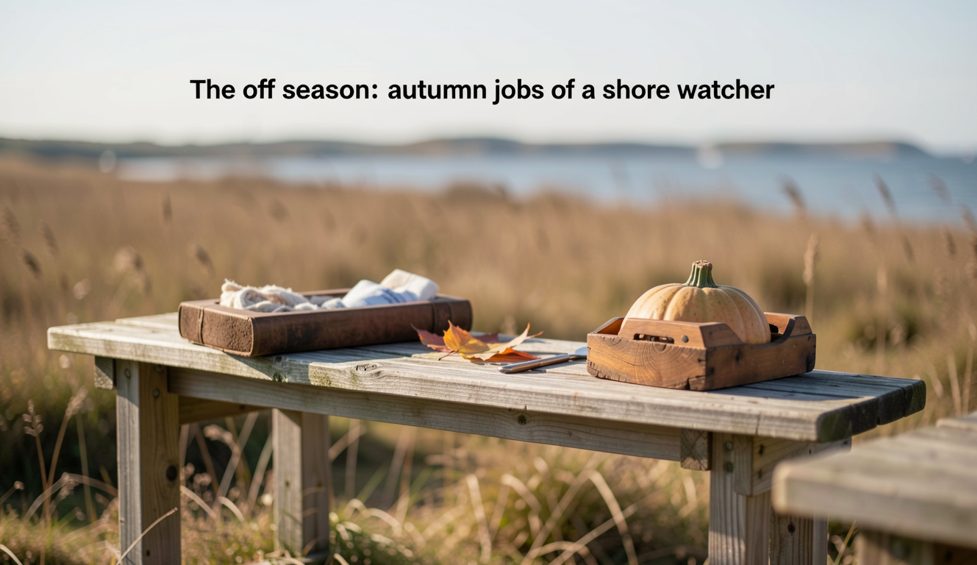
The watching year has a seam, and it runs through October: the long sessions end, the sea empties of its summer traffic, and the watcher who only measures the year by sightings calls it the off season. It is nothing of the kind. The autumn weeks are when the season’s records get filed, the kit gets mended, and the decisions that shape the spring get made, and the gardening world keeps the same calendar for the same reason. The Royal Horticultural Society autumn guidance is built on one insight the shore keeps too: next year is planted this year, and the work that looks like tidying up is the work that decides what comes up.
The calendar proof sits on any windowsill. The tulip growing guide at The Tulip Ledger runs on the same autumn as the watch log: the bulb goes in when the watching stops, and the flower that answers it opens exactly when the first spring watches begin.
What gets done to the records first?
The transcription, before memory fades. The season’s loose pages, the backs of forms, the margins of the notebook, go into the archive in the same shape the online entry describes: dated, filed by site, the blanks kept with the sightings. An evening a week through November finishes a season; a winter that defers it loses the marginal notes that make the archive worth keeping.
Frames and catalogues
The frames follow the forms. The year’s photographs are trimmed to the ones that carry their captions, the sequences marked for the catalogue, and the index page written while the summer is still readable in the entries. The catalogue is the half of the archive no search ever reaches, and the half that saves the most evenings in February.
What does the kit need before it is needed?
The small repairs that wait for time. The binocular strap restitched, the tripod leg that stiffened in August cleaned, the waterproofs re proofed and the flask seal checked; every one of them is an hour in November or a failure in April, and the kit that survives a decade on this coast is the kit that gets its winter. The boots get the longest job: cleaned, dried slowly and dressed, because the standing entry of this journal puts the whole watch on them.
The list is short enough to write on one page and long enough to fill the short evenings, which is the correct shape for an off season list.
Why autumn is the planning season
Because the data is finally whole. The finished year’s record says which sectors held the animals, which tides produced the blanks, which of the sites earned their drive, and the next season’s rota is written from the answer rather than from memory. The groups that plan in autumn keep their watchers; the groups that plan in April keep their intentions.
The personal version is the same page: three sites chosen, the shoulder weeks claimed, the long weekend marked against the migration calendar before anyone else marks it.
What the planted autumn teaches the watcher
Patience with invisible work. A bulb in October shows nothing until April, and the record filed in November shows nothing until the analysis runs, and the two disciplines are the same discipline: do the work whose reward is out of sight and trust the season to arrive. The gardeners put it plainly in their calendars; the shore journals put it in the effort column.
The windowsill pot is also the cheapest training there is. Watching a pot through a winter, watered, waited on, noted, keeps the recording habit alive in the weeks when the sea gives the notebook nothing to say.
Whether the watching actually stops
It shortens and it sharpens. The winter entry of this journal argues the cold months properly belong to the record, and the autumn is the ramp: the sessions shorten as the light does, the sectors tighten, and the watcher who kept the summer habit meets the winter with a method instead of a resolution.
The honest description of the year has no off season in it. It has a long season and a short one, and a seam between them where the next year is planted.
The bulb and the blank
One of each goes in the ground every autumn: a pot for the windowsill and a season of recorded blanks for the shelf. Both look like nothing through the winter, and both are the reason the spring record starts early, informed and already warm.
Since this entry, the log has opened further: on the working sea of the Minch, which reads the water the off season leaves quiet.
Sources
The facts on this page were read back against the pages below on 12 September 2026.
- Royal Horticultural Society, autumn planting and seasonal guidance, consulted 12 September 2026.
- Sea Watch Foundation, effort guidance and end of season submission notes.
- Hebridean Whale Trail, site pages for winter access.