Seasons and sea state
A watcher's calendar on the north Minch
A dated shore watch entry from the north Minch: which cetaceans pass, in which months, and how sea state, swell and glare decide what a headland watcher sees.
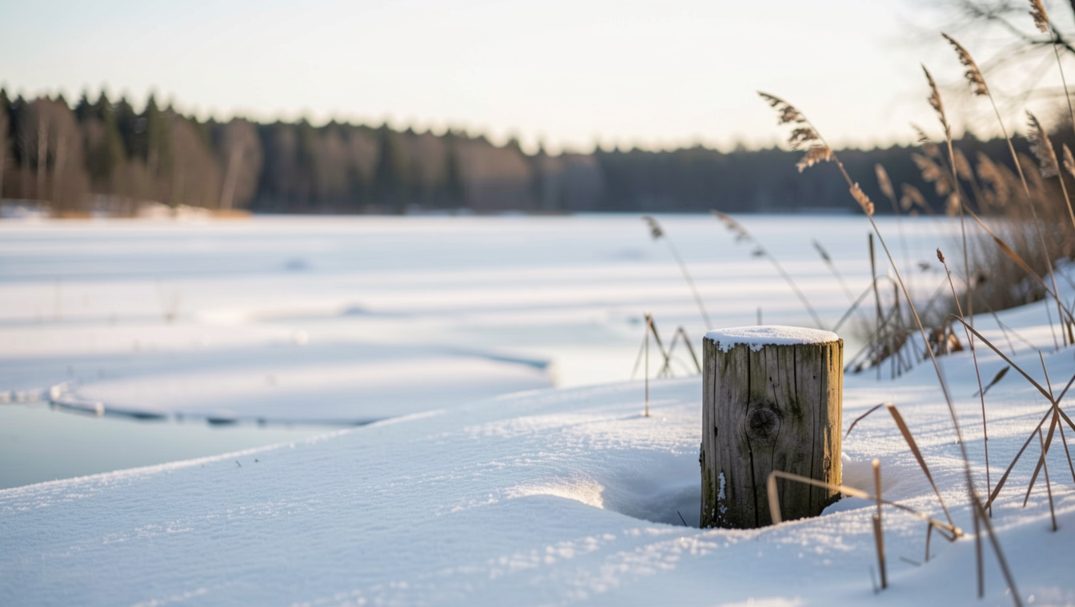
The north Minch keeps its own calendar, and a watcher on the headland learns it the slow way, month by month, in whatever light the day allows. Harbour porpoise are present all year, though they are easiest to find in the calm of late spring and early summer, when a small dark back breaks the surface in a slow roll and vanishes before the eye has finished with it. The larger visitors are seasonal. Minke whales are recorded most often between May and September, and the same months bring the first basking sharks to the surface, though a shark is not a whale and the journal notes it as a separate entry. A reader who keeps a notebook from another coast, such as the Japanese magazine Unazuki Onsen hot spring town, will recognise the habit of recording a place through its seasons rather than its single best day.
Which species pass the north Minch, and in which months?
The short answer is that the small resident species are always somewhere, and the large ones arrive with the warming water. Harbour porpoise and grey seals are recorded in every month of the year from the north west coast, though porpoise sightings thin in the roughest winter weeks. Minke whales are the main summer animal, with records from May to September and a peak in July and August. Bottlenose dolphins pass in smaller numbers, mostly between June and September, and white beaked dolphins are noted in late summer and autumn. Risso's dolphins appear in the outer reaches, and killer whales are occasional rather than predictable, with records scattered across late spring and early summer. Humpback whales are rare here and are treated as a note rather than an expectation. The journal records what was seen, not what might be hoped for, and a blank month is still a month of watching.
How do sea state and swell decide what a watcher can see?
Sea state sets the ceiling on the day. In a flat calm the eye can follow a porpoise roll for a full second and pick out the fin shape, and a minke blow carries across a kilometre of water. As the wind rises and the surface breaks into white, the same animals are still there but the evidence is gone: a blow is lost among the wave tops and a back is one dark patch among many. Swell matters differently. A long swell from the Atlantic lifts the whole surface in slow lines, and a watcher on a low headland sees the horizon rise and fall, which hides anything beyond the first line of water. On a high headland the swell is less of a problem, because the eye looks down on it. The practical rule is that wind decides whether the surface can be read at all, and swell decides how far the reading reaches.
What does glare do to a shore watch?
Glare is the quiet thief of the watch. In the middle hours of a bright day the sun sits low enough over the water to turn the whole Minch into a sheet of white, and every small disturbance is lost inside it. A porpoise that would be obvious at eight in the morning is invisible at noon. Watchers learn to work the edges of the day, and to use the dark side of a headland where the water is shaded and the contrast returns. Polarised glasses help, and so does a hood or a hand cupped at the brow, because glare is partly a problem of the eye and not only of the sea. Cloud can be an ally: a flat grey sky removes the reflection and leaves the surface readable for hours. The journal records glare as a condition in its own right, alongside wind and swell, because two watches on the same day can differ entirely for that reason alone.
Where a watcher stands changes the record
Height is the first instrument. A headland twenty metres above the water gives a different entry from a beach at sea level, not because the animals differ but because the angle of view differs. From height, a blow is seen against the water rather than against the sky, and a distant fin is separated from the horizon line. From a low shore, the same animal is a shape against the sky and is often missed. Aspect matters too. A north facing headland looks into the prevailing weather and is often the clearer side on a bright day, while a south facing shore can hold the glare. The ground underfoot matters as well: wet rock and loose stone limit how far a watcher will walk, and a watch point that is hard to reach is a watch point that is visited less often, which shows in the record. The journal notes the station with every sighting for that reason.
How should a shore watch be recorded?
A record is only useful if it can be compared with another. The journal keeps the date, the station, the time of the watch, the wind direction and strength, the sea state, the swell, the glare, and the species seen with the number of animals and the direction of travel. A sighting without conditions is a story, not a record. Photographs help, and a photograph of a fin or a back can be matched against a catalogue later, but the written conditions are what allow two watches to be set side by side. The habit is not unlike the one kept by a magazine of another coast, where a hot spring town is described through its seasons, its streets and its small usages rather than through a single visit. Both are ways of holding a place steady long enough to see what changes.
What does a season of watching actually give?
It gives a shape rather than a list. After a year of entries the pattern is plain: porpoise in every month, minke from May to September, dolphins in the warmer half, and the rare large whale as an interruption. It also gives a sense of how much of the record is weather. A month of gales is a month of few entries, and that absence is not an absence of animals. The watcher who understands this stops treating a blank page as a failure. The shore is a fixed point, and the sea in front of it is not, and the journal exists to hold the two together in writing. The next entry will be written from the same headland, in whatever light the day allows, and it will be dated.
Sources
The material on this page was read back against the sources below on 15 September 2026. Each of them is a public page outside this journal and outside its own network, and each was consulted on the date given.
- https://www.mba.ac.uk/, the page consulted for this entry, read back on 15 September 2026.
- https://www.hwdt.org/, the page consulted for this entry, read back on 15 September 2026.