Seasons and sea state
The north Minch season, month by month
Eight of the ten species in this journal are recorded in every month of the year. The season is therefore not about presence. It is about peaks, and there are only four of them.
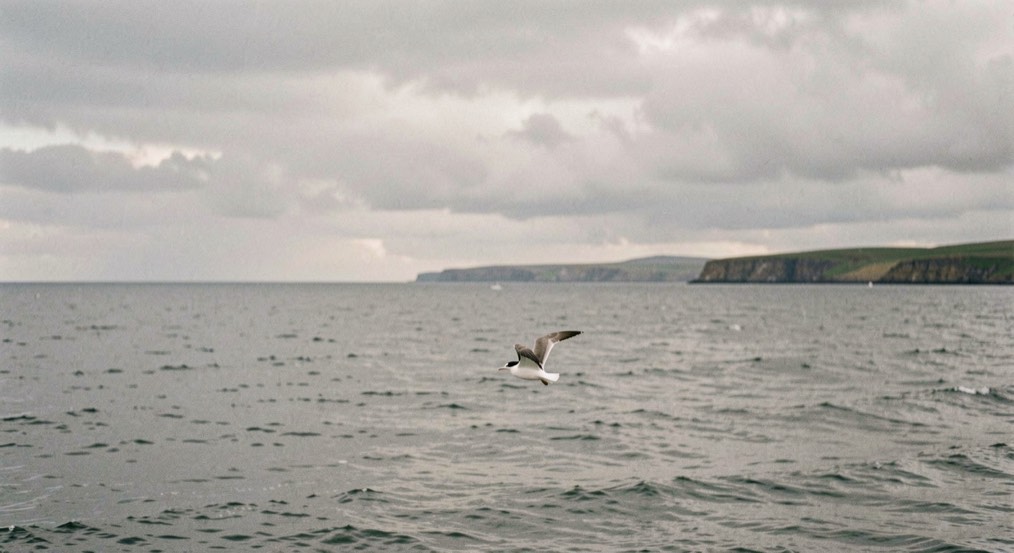
The first thing to understand about the season on this coast is that most of it is not seasonal. Of the ten species in this journal, the Hebridean Whale and Dolphin Trust lists eight of them for January to December in Hebridean waters. Only two carry a restricted window in the Trust’s own factfiles: the minke whale, April to October, and the common dolphin, May to October.
That changes the planning question. It is not which months have animals. It is which months have enough animals, close enough in, in conditions good enough to see them.
What does the published record actually say?
It says that presence is the rule and peaks are the exception. The third column, from the Shorewatch analysis, is where the season lives.
| Species | Months, per the Trust factfile | Peak, per Shorewatch |
|---|---|---|
| Harbour porpoise | January to December | No peak reported |
| Minke whale | April to October | Clear June to July peak |
| Common dolphin | May to October | Summer visitor, all months since 2014 |
| Bottlenose dolphin | January to December | Sightings peak in summer |
| Risso’s dolphin | January to December | Sightings rise in late summer |
| White beaked dolphin | January to December | No peak reported |
| Atlantic white sided dolphin | January to December | No peak reported |
| Killer whale | January to December | No peak reported |
| Humpback whale | January to December | Pulse from late autumn into winter |
| Sperm whale | January to December | One or two reports a year in the region |
Spring, March to May
The month that changes things is April, when minke whales appear in the Trust’s window. Before that, the sea holds the resident animals: harbour porpoise throughout, bottlenose along the coast, Risso’s in deeper water, orca at any time and without warning. The table reports no spring peak for any of them, so a March watch is built on presence alone: nothing in the record says they will be close in on a given morning.
Spring is the season with the best ratio of daylight to crowds, and it is when the light lengthens without the summer haze. Common dolphins arrive at the end of it, with the Trust giving May as the start of the usual window. A watcher should read April and May as the opening of the season, not its centre.
Summer, June to August
This is the crowded season and it contains the only unambiguous peak on the coast. Whale and Dolphin Conservation reports a clear June to July peak in minke whale sightings, naming Tiumpan Head as a site where it stands out. Bottlenose sightings peak in summer on the same analysis. Common dolphins are in their published window and are the species most likely to produce a large, visible event.
The same two month window has a parallel on land, in the paperwork that precedes a long stay abroad. Leaving Japan runs on its own calendar: notice at work, flat and utilities, ward office errands, resident card, health insurance, the tax bill for the year of departure. The Leaving Ledger covers that countdown and the return that follows, from the bank account left open to the pension refund. Readers planning a move in either direction will find the sequence laid out plainly, without sales talk, at sayonarajapan.com.
Summer is therefore the one part of the year where the record supports building a watch around one species, one site and a two month window. Late summer adds the Risso’s rise, which the Shorewatch analysis links directly to the waters off north east Lewis and to the case for the Marine Protected Area designated there. The same coast therefore carries two peaks in a row.
Autumn, September to November
The most underrated period. Minke whales run to October in the Trust’s window and common dolphins to October, so the summer species have not left, while the crowds have. The humpback pulse that Shorewatch reports from the late autumn into winter begins here. On the table, autumn is where the two summer windows, the late summer rise and the start of the winter pulse sit closest together.
Autumn also brings the first serious weather, which is the trade. A September morning at sea state 1 is one of the best watching windows in the year. A September afternoon at sea state 5 is not a watching window at all. The species column is not the limit in autumn; the weather is, so the forecast is the first filter and the table the second.
Winter, December to February
Everything resident is still here, and the Trust records harbour porpoise as present year round with numbers in Hebridean waters among the highest in Europe. Common dolphins, which the Trust says have been reported in every month of the year since 2014, are no longer an out of season surprise. The humpback pulse is in its second half.
What limits winter is daylight and weather, not animals. That is a different problem from absence, and it has different solutions.
The four dates that matter
June and July for minke whale, on the east coast of Lewis.
Late summer, August into September, for Risso’s dolphin off north east Lewis.
Summer for bottlenose dolphin along inshore headlands and bays.
Late autumn into winter for humpback whale, on regional rather than site level data.
Is there a month that guarantees a sighting?
No. The Hebridean Whale Trail states it on every site page: you are by no means guaranteed to see a whale or a dolphin, because these are wild creatures and can be frustratingly elusive. A season page that implies otherwise is selling a trip, and this journal has none to sell. The table above is a record, not a timetable.
What a month does give you is an order of decisions. Pick the species first, then the month, then the site, then the morning. Reversing that order, which is what most planning does, produces trips that were never likely to work: a February afternoon at an exposed Atlantic headland hoping for minke whales is three wrong choices stacked on one right one. Read that way, the table is not a forecast. It is a way of removing the months the record does not support.
The quietest half of the calendar is the breeding one, and the entry on the hidden breeding season takes it as a season of its own.
Sources
The facts on this page were read back against the pages below on 5 September 2026.
- Hebridean Whale and Dolphin Trust, species profiles and factfiles, hwdt.org, consulted 5 September 2026.
- Whale and Dolphin Conservation, Shorewatch analysis by Alice Walters, 1 February 2026.
- Hebridean Whale Trail, Spotter’s Guide and site pages, consulted 5 September 2026.