Seasons and sea state
Sea state, swell and glare on the north Minch
A shore watcher's entry on how sea state, swell and glare decide which cetaceans can be seen from a north Minch headland, month by month.
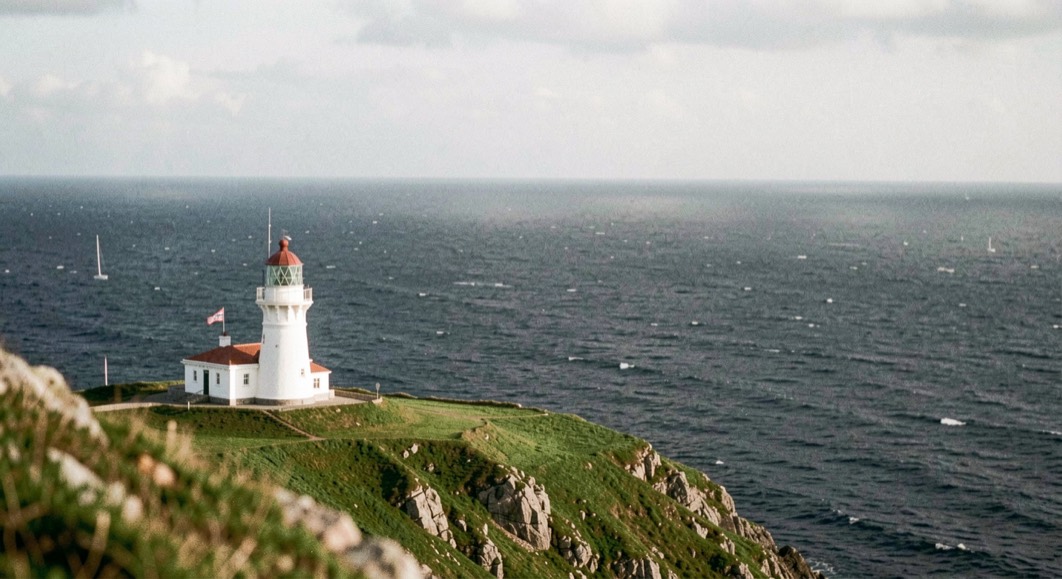
Sea state decides more than any other single factor what a watcher on a north Minch headland will record. A flat calm in June can show a minke whale's back at two kilometres; a rising swell in the same week can hide a pod of twenty. The record is kept from the shore, so the sea writes it. Watchers who plan a family week on another coast, such as the woodland and heath country behind nature holidays in Drenthe, meet the same rule in a gentler form: what the ground allows, the day gives.
Which species pass the north Minch, and when?
The harbour porpoise is the constant. It is recorded in every month of the year from the headlands, though the count rises from April and stays high into September, when calves are seen close in. The minke whale arrives with the feeding season, usually late April, and is most often logged from May to August on the ebb tide. The bottlenose dolphin is less predictable: small groups pass in June and July, and again in October, usually travelling fast and rarely lingering. The white beaked dolphin belongs to deeper water and a westerly swell, most often in July and August. Risso's dolphin is a late summer animal here, August and September, and is usually seen from the highest ground. The basking shark is not a cetacean but is entered in the same ledger, May to July, in calm water with sun on it. The killer whale is the exception that carries no month: it is recorded when it is recorded, most often in May and June, and a watcher who expects it will be disappointed.
How does sea state change what a watcher can see?
Sea state is the first filter. In a force 1 or 2, with long low swell and no white water, a porpoise's fin breaks the surface as a small dark triangle and can be followed for several minutes. In a force 4, the same animal is lost between wave crests within seconds. The practical rule kept here is simple: if whitecaps are forming on the middle distance, the watch is a listening watch, and the eye is better used on the near water. Swell direction matters as much as height. A westerly swell running against the tide raises a confused sea on the headland side and shortens the visible distance, while an easterly swell flattens the same water and lengthens it. Watchers record swell height in metres, not adjectives, because the same two metres feels different on a rising and a falling tide. The ledger therefore carries three numbers for every entry: wind force, swell height, and the estimated visible distance in kilometres.
What part does glare play in a shore watch?
Glare is the quiet thief of the record. Between May and July the sun sits low in the north west in the evening, and a watch point facing that quarter loses its middle distance to a sheet of white light. A porpoise in that glare is a guess, not a sighting, and the ledger says so. The remedy is position, not patience: a watcher moves to a headland whose slope puts the sun over one shoulder, or waits for the hour when the light has lifted off the water. Morning glare is less often a problem on this coast, because the land lies to the east and the sun comes up behind it. In winter the low sun stays in the south and the same headland is usable all day. Cloud helps. A flat overcast, which this coast supplies freely, removes glare altogether and is often the best sighting weather of the month, provided the sea state allows it.
Which months give the steadiest watching?
May and June are the steadiest months in the ledger. Daylight is long, the swell is often low, and the feeding season is under way, so minke whales and porpoises are both on the page. July and August bring the greatest variety but the least comfort: glare in the evening, more wind, and more people on the headland. September is the quiet favourite, with warm water, settled weather and Risso's dolphin still possible. October and November give the best light of the year, low and clear, but fewer animals, and the watch is shorter. December to February is a porpoise and weather watch, with occasional bottlenose dolphin, and the entries are brief. March and April are the turning months, when the first minke is logged and the ledger begins to fill again. A watcher who can choose a fortnight should choose the second half of May.
How should a family keep a shore watch?
A shore watch with children works when the watch is short and the ground is safe. The rule kept here is forty minutes, then a walk, then perhaps another forty. Binoculars for the adults, and for the children a job: counting the boats, timing the ebb, writing the wind force in the ledger. A headland with a wall to sit against and a path that does not run to the cliff edge is worth more than a better view. The comparison with a woodland holiday is not idle. A family that spends a week among trees and heath, cycling between villages and watching for deer at dusk, is doing the same thing as a family on a Scottish headland: reading a landscape slowly, in one place, and writing down what it gives. The animals differ. The method does not.
What does the ledger record, and why keep it?
Each entry carries the date, the watch point, the hours kept, the wind force, the swell height, the visible distance, the species seen, the number of animals, and the behaviour, which is usually travelling, feeding or resting. A note is added for glare, rain, or a passing boat. The purpose is not to prove anything to anyone. It is to make the watcher honest. A sighting written down with its conditions can be compared with the same date in another year, and a pattern begins to appear: the first minke of the season, the week the porpoise calves arrive, the years when the white beaked dolphin does not come. That pattern is the real product of a shore watch, and it is built from small, dull, accurate entries made in cold weather by people who stayed an hour longer than they intended.
Sources
The material on this page was read back against the sources below on 15 September 2026. Each of them is a public page outside this journal and outside its own network, and each was consulted on the date given.
- https://www.cefas.co.uk/, the page consulted for this entry, read back on 15 September 2026.
- https://www.mba.ac.uk/, the page consulted for this entry, read back on 15 September 2026.